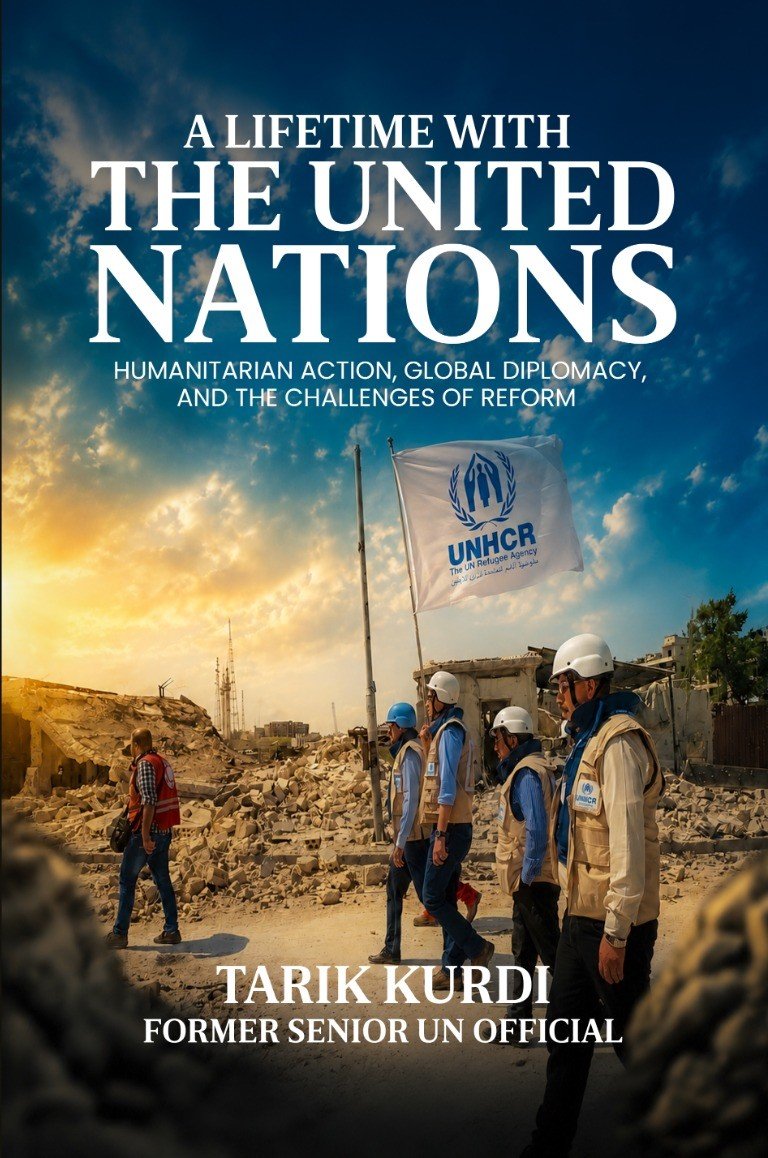
Excerpts
In the author’s words
A selection of short passages from the book. These extracts are offered as a glimpse of the whole.
Preface
I observed the Organization not only from headquarters and conference rooms, but more particularly from the deep field — often in environments marked by conflict, humanitarian crises, and fragile political and security situations.
Introduction
The present situation of the United Nations calls for uneasy comparison with the final years of the League of Nations — a widening gap between its ambitions on the one hand, and its enforcement capabilities on the other.
Chapter One — The League of Nations
The collapse of the League was not sudden, but rather the cumulative result of an institution whose legal framework and political realities were fundamentally mismatched.
Chapter Six — Humanitarian Activities
For millions of civilians trapped by armed conflict, natural disasters, or forced displacement, the presence of the United Nations has frequently represented the difference between survival and catastrophe.
Humanitarian Operations — Syria
Through sustained humanitarian negotiations, temporary access arrangements were secured, enabling cross-front-line operations into previously besieged areas — delivering life-saving assistance to populations cut off from aid for prolonged periods.
Humanitarian Operations — Sudan
Launched in 1989, Operation Lifeline Sudan is widely regarded as one of the most significant and pioneering United Nations humanitarian initiatives in modern practice, demonstrating that negotiated access can be achieved even in highly fragmented conflict environments.
The Global Impact of Humanitarian Action
Its greatest contribution lies in preserving human life, defending human dignity, sustaining hope in the darkest moments of crisis, and reaffirming that the international community shares a collective responsibility to those most affected by conflict, disaster, and displacement.
The Challenges of Reform
The only viable path for the United Nations to emerge from its chronic crises lies in the implementation of a comprehensive programme of structural reform — one that must go beyond empty commitments and confront the Organization’s foundational imbalances.
These are short extracts only. The complete work will be available in the forthcoming ebook, paperback and hardcover editions.
A lifetime, in one volume
Discover the book, its themes and the career that shaped it.